

How to Stay Productive Without Burning Out: Effective Strategies for Lasting Focus
Have you ever wondered why 76% of professionals report experiencing burnout at least sometimes, yet only 28% know effective strategies to combat it? In today's hyper-connected world, the pressure to constantly produce has created a productivity paradox: the harder we push, the closer we get to diminishing returns and eventual burnout. Learning how to stay productive without burning out isn't just a workplace skill—it's essential for sustainable success and wellbeing in every area of life. Studies show that properly managed productivity actually increases energy rather than depleting it, but this requires a strategic approach to work and recovery.
The Essential Elements of Sustainable Productivity
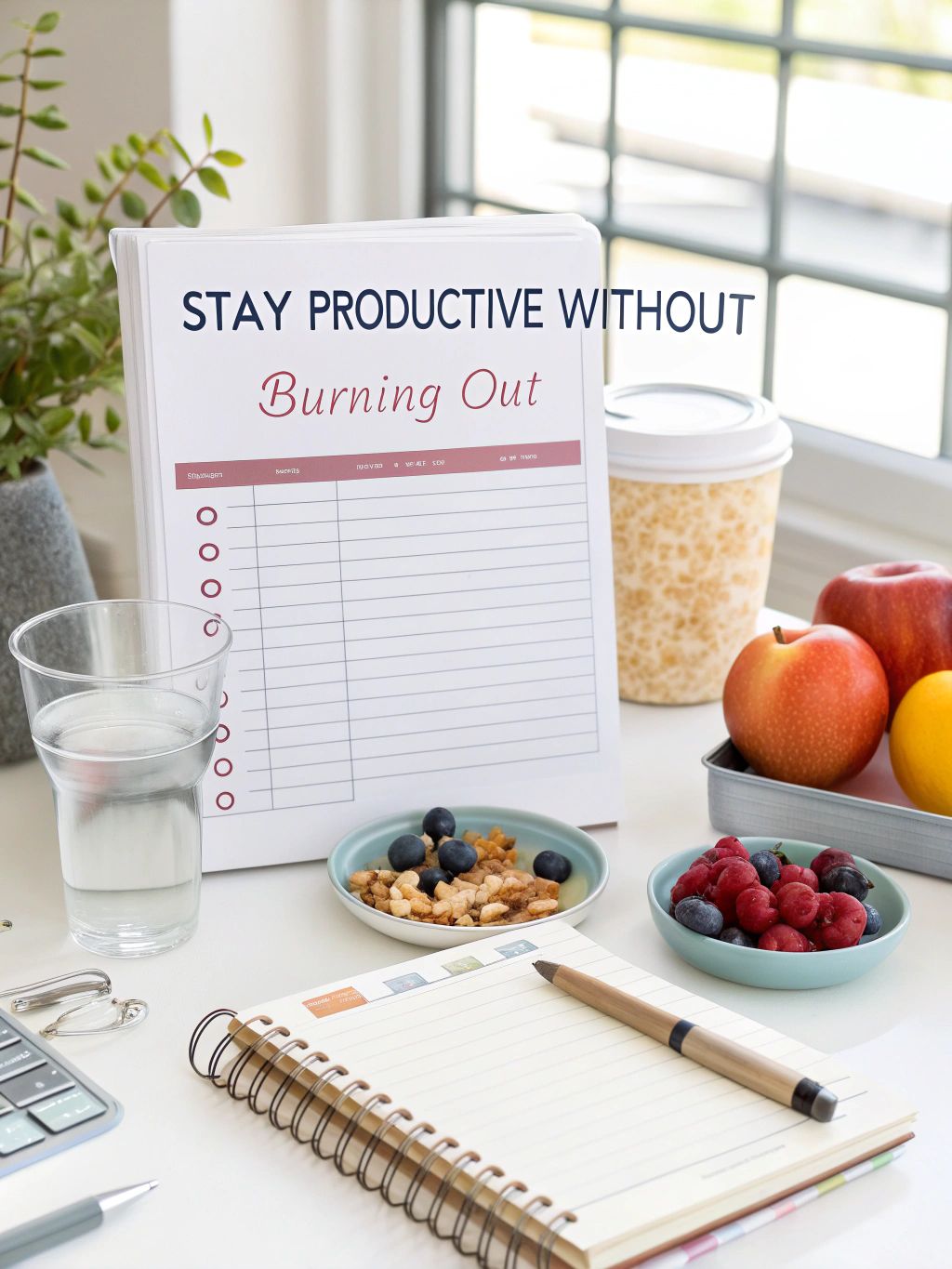
To avoid burnout while working, you need these foundational elements:
- Strategic breaks: 90-minute work intervals followed by 15-30 minute breaks
- Sleep hygiene: 7-9 quality hours per night
- Nutritional support: Well-balanced meals with adequate hydration
- Physical movement: At least 30 minutes of activity daily
- Mental boundaries: Clear separation between work and personal life
- Purpose alignment: Tasks connected to meaningful goals
- Social support: Regular connection with supportive people
Substitutions: When time is limited, even micro-breaks of 5 minutes can help. If you struggle with sleep, meditation can partially compensate for sleep deficits in the short term.
Time Investment vs. Return
Implementing a sustainable productivity system requires:
- Initial setup time: 2-3 hours for planning systems
- Daily maintenance: 20-30 minutes for planning and reflection
- Weekly review: 60 minutes to assess progress and adjust
Research shows this investment yields a 23% increase in productivity while reducing burnout risk by up to 40%—a significant return compared to the average productivity loss of 20-25% when working in a burned-out state.
Step 1: Recognize Warning Signs Early
The first step to prevent burnout and stay focused is recognizing when you're approaching your limits. Physical symptoms like persistent fatigue, headaches, or disrupted sleep often precede mental and emotional signs.
Pro tip: Create a personalized "warning system" by tracking your energy, focus, and stress levels daily on a scale of 1-10. When your numbers drop consistently for 3+ days, it's time to adjust your approach.
Step 2: Implement Strategic Work Blocks
Research from the Draugiem Group shows that the most productive people work for focused 52-minute intervals followed by 17-minute breaks. This rhythm aligns with your brain's natural attention cycles.
Pro tip: Try the Pomodoro Technique (25-minute work blocks with 5-minute breaks) if you're new to structured work intervals, then gradually extend to find your optimal work-rest ratio.
Step 3: Design Recovery Activities
Not all breaks are created equal. Studies show that nature exposure, social connection, and physical movement provide the most cognitive restoration, while digital activities often fail to replenish mental resources.
Pro tip: Create a personalized "recovery menu" with 5-minute, 15-minute, and 30-minute activities that genuinely energize you, and select from this menu during scheduled breaks.
Step 4: Set Boundaries and Honor Them
According to research, clear boundaries between work and personal time significantly reduce burnout risk. This might include designated work hours, a physical workspace, or digital boundaries.
Pro tip: Use transition rituals to signal the end of work (such as clearing your desk, writing tomorrow's to-do list, or taking a walk) to help your brain disconnect.
The Neuroscience of Sustainable Productivity
Understanding the brain science behind productivity can help you work with—rather than against—your natural cognitive patterns:
- Default Mode Network: Your brain's creative center activates during rest, explaining why solutions often come during breaks
- Attention Restoration: Nature exposure restores directed attention, with as little as 20 minutes showing measurable cognitive benefits
- Ultradian Rhythms: Your brain naturally cycles between high and low energy approximately every 90 minutes
This data explains why pushing through fatigue is counterproductive—you're fighting against your brain's natural operating system.
Creating a Personalized Sustainability Plan
To develop sustainable productivity habits:
- Audit your current work patterns to identify energy drains and productivity peaks
- Design your workday around your natural energy fluctuations
- Build in proactive recovery periods before you feel exhausted
- Regularly reassess and adjust your system based on results
This personalized approach acknowledges that effective productivity strategies vary between individuals—what works for your colleague may deplete you.
Common Productivity Pitfalls to Avoid
The most damaging productivity myths that lead to burnout include:
- Believing longer hours equal more output
- Multitasking as an efficiency strategy
- Postponing rest until work is "finished"
- Using caffeine to override fatigue signals
- Neglecting sleep to gain more working hours
Research consistently shows these approaches reduce cognitive function and lead to diminishing returns.
Long-Term Maintenance Strategies
To sustain productivity over months and years:
- Schedule quarterly "productivity audits" to evaluate and adjust your systems
- Build a "minimum viable routine" for high-stress periods
- Develop clear metrics for both productivity and wellbeing
- Create accountability through mentors or productivity partners
This long-term perspective prevents the cycle of productivity surges followed by burnout crashes.
Conclusion
Learning how to stay productive without burning out is not about working harder but working intelligently with your body's natural rhythms and needs. By implementing these evidence-based strategies, you can achieve sustainable productivity that enhances rather than compromises your wellbeing. Remember that true productivity isn't measured by hours worked but by meaningful output sustained over time.
FAQs
How can I tell the difference between normal tiredness and early burnout?
Normal tiredness resolves after proper rest, while early burnout persists despite rest and is often accompanied by cynicism, detachment from work, and reduced effectiveness.
What should I do if I'm already experiencing burnout?
Recovery requires more than brief rest. Consider a more extended break if possible, seek professional support, and rebuild gradually with enhanced boundaries and self-care practices.
Can productivity apps help prevent burnout?
They can help with task management, but be cautious—45% of professionals report that excessive productivity tools actually increase stress. Choose 1-2 simple tools that reduce rather than add to your cognitive load.
How do I maintain productivity when working from home?
Create physical and temporal boundaries that separate work from personal life, establish transition rituals, and prioritize social connection to replace workplace interaction.
Is it possible to be highly productive without any risk of burnout?
While some stress is inevitable with ambitious goals, burnout is preventable through proper recovery, boundary-setting, and work-life balance for productivity. The key is sustainable pacing rather than elimination of all stress.
